
A Comprehensive Guide for Arab Entrepreneurs, Investors, and Business Professionals
Business Opportunities in India are expanding rapidly as the country emerges as one of the world’s fastest-growing major economies, offering Gulf investors a wide range of high-potential sectors including technology, real estate, healthcare, education, renewable energy, and logistics.
With a GDP surpassing USD 3.7 trillion, a young and skilled workforce of over 500 million, and a government actively welcoming foreign direct investment (FDI), India represents one of the most compelling markets for Arab investors today. This guide covers the most promising sectors, the investment framework, practical entry steps, and important cultural considerations for Gulf nationals planning to invest in India.
Primary & Secondary Keywords
- Business opportunities in India Primary Keyword:
- Gulf investors India, FDI in India, Arab investment India
- India startup ecosystem, real estate investment India
- renewable energy India, healthcare investment India
- India business visa Gulf, how to invest in India from UAE
- India economic growth 2025, best sectors to invest in India
Introduction: Why India Matters for Gulf Investors
India and the Gulf Cooperation Council (GCC) countries share one of the most productive and enduring economic partnerships in Asia. Trade between India and the GCC exceeds USD 160 billion annually, and this figure continues to grow year after year. But trade is just one part of the story. Increasingly, Gulf investors — from sovereign wealth funds in Abu Dhabi and Riyadh to individual entrepreneurs in Dubai and Doha — are looking at India not only as a trading partner but as a destination for direct investment and business partnership.
The reasons are straightforward. India has the world’s largest population (over 1.4 billion people), a rapidly expanding middle class of more than 400 million consumers, a government committed to economic reforms, and a regulatory environment that is progressively opening to foreign capital. India’s digital economy, in particular, is growing at a pace that rivals any country in the world.
For Arab investors, India is especially attractive because of deep cultural, historical, and trade ties that stretch back centuries. Indian communities in the UAE, Saudi Arabia, Qatar, Kuwait, Bahrain, and Oman number in the millions, creating natural bridges of trust, language, and business understanding. This article, prepared by Yallahind — the platform dedicated to connecting Arab audiences with India — provides a practical, accurate, and culturally aware roadmap to the most promising business opportunities available today.
Internal Link Idea: Yallahind — India-GCC Trade Relations Overview (Business category)
Purpose and Scope of This Article
This guide is designed to serve Gulf investors at every stage — whether you are exploring India for the first time, comparing investment options, or ready to take concrete steps. By the end of this article, you will understand:
- The top sectors offering the strongest business opportunities in India
- How India’s FDI framework works and what regulations apply to Gulf investors
- Step-by-step guidance on how to set up a business or investment in India
- Common mistakes Arab investors make and how to avoid them
- Cultural and practical tips for doing business in India as an Arab professional
This article covers direct investment, business partnerships, and startup investment. It does not cover securities trading or portfolio management, which require separate regulatory frameworks.
Key Concepts and Definitions
Foreign Direct Investment (FDI)
FDI refers to investment by a company or individual in one country into business interests in another country — typically through establishing business operations or acquiring business assets such as ownership or controlling interest in a foreign company. India is one of the largest recipients of FDI globally.
Automatic Route vs. Government Route
In India, most sectors allow FDI through the ‘Automatic Route,’ meaning no prior government approval is needed. Some strategic sectors require government approval through what is called the ‘Government Route.’ Gulf investors should identify which route applies to their target sector before proceeding.
Make in India Initiative
Launched by the Government of India, Make in India is a national program inviting global investors to manufacture and invest in India across 25+ sectors. It simplifies regulations, offers incentives, and provides dedicated support to foreign investors.
DPIIT (Department for Promotion of Industry and Internal Trade)
DPIIT is the primary Indian government body responsible for FDI policy. It maintains the Invest India portal, which is the official national investment promotion agency.
Startup India & Business Opportunities in India
A government initiative to build a strong ecosystem for startups in India. Foreign investors, including Gulf nationals, can participate through various funding mechanisms in India’s rapidly growing startup ecosystem.
Historical Context: The India-Gulf Investment Story

The economic relationship between India and the Arabian Gulf is not new. For centuries, merchants from the Gulf traded spices, textiles, and gold with Indian coastal cities. In the modern era, this relationship deepened significantly after the oil boom of the 1970s, when millions of Indian workers migrated to Gulf countries, sending remittances home and building personal and professional ties.
The first major wave of Gulf investment into India came in the 1990s following India’s economic liberalization. Non-Resident Indians (NRIs) in the Gulf invested in Indian real estate, gold, and manufacturing. By the 2000s, sovereign wealth funds from UAE and Qatar began participating in Indian infrastructure and energy projects.
The most significant shift, however, has come in the past decade. The Abu Dhabi Investment Authority (ADIA), the Abu Dhabi National Energy Company (TAQA), Mubadala Investment Company, Saudi Aramco, and the Public Investment Fund (PIF) of Saudi Arabia have all made substantial investments in Indian energy, technology, and infrastructure. This institutional interest has opened doors for smaller Gulf investors who now see India as a credible, regulated, and high-potential environment.
Expert Reference: For a detailed academic treatment of India-Gulf economic relations, see ‘India and the Gulf: What the Links Mean’ published by the Arab-British Chamber of Commerce, and works by Dr. Diva Dhar, economist and former adviser to India’s NITI Aayog, on India’s investment climate.
Current Scenario: India’s Investment Climate in 2025-2026
India’s economy in 2025-2026 is characterized by sustained high growth, a reform-minded government, and strong global investor confidence. Key indicators include:
| Indicator | Current Figure (2025-26) | Significance |
| GDP (Nominal) | USD 3.7 trillion+ | 5th largest globally, growing ~7% p.a. |
| FDI Inflows | USD 70-75 billion/year | Among top 5 FDI destinations globally |
| Ease of Business Rank | Top 65 (World Bank) | Significant improvement from 142nd in 2014 |
| Startup Ecosystem | 3rd largest globally | 100+ unicorns, 100,000+ startups |
| Digital Economy | USD 1 trillion by 2028 (est.) | Fastest growing digital market globally |
| GCC-India Trade | USD 160+ billion annually | Strong and growing bilateral relationship |
The Indian government has introduced several investor-friendly measures in recent years, including 100% FDI in most sectors, single-window clearance systems, production-linked incentive (PLI) schemes, and dedicated industrial corridors that provide land, utilities, and logistics support to manufacturers.
💡 Tip: India’s Invest India portal (investindia.gov.in) offers a free, multilingual investment facilitation service for international investors, including sector-specific advisors and regulatory guidance.
Internal Link Idea: Yallahind — How to Get an Indian Business Visa from the UAE/Saudi Arabia (Business category)
Key Stakeholders and Actors
On the Indian Side
- Government of India (Ministry of Commerce & Industry, DPIIT): Sets FDI policy and regulations
- Invest India: National investment promotion agency, provides hands-on support to foreign investors
- Reserve Bank of India (RBI): Governs foreign exchange regulations and investment approvals
- Securities and Exchange Board of India (SEBI): Regulates capital markets and portfolio investment
- State Governments: Each Indian state has its own investment promotion agency and offers state-level incentives
On the Gulf Side
- Public Investment Fund (PIF) — Saudi Arabia: Active investor in Indian energy, technology, and infrastructure
- Abu Dhabi Investment Authority (ADIA) and Mubadala — UAE: Significant presence in Indian real estate and tech
- Qatar Investment Authority (QIA) — Qatar: Investments in Indian startups and financial services
- Kuwait Investment Authority (KIA) — Kuwait: Emerging interest in Indian markets
- Arab Chamber of Commerce and Industry: Facilitates Indo-Arab business connections
Top Business Opportunities in India for Gulf Investors
Below are the most significant and accessible sectors for Gulf investors in India, with practical context for each.
1. Technology and Digital Economy
India is home to the world’s third-largest startup ecosystem, with over 100 unicorn companies valued at USD 1 billion or more. The country produces more than 1.5 million engineering graduates annually, providing a deep talent pool for technology businesses. Cities like Bengaluru, Hyderabad, Pune, and Chennai are globally recognized technology hubs.
Key Opportunities
- Venture capital and angel investment in Indian technology startups
- Co-founding or acquiring technology service companies (IT/ITES)
- Investment in fintech, health tech, edtech, and agritech platforms
- Setting up technology development centers leveraging India’s skilled workforce
Suggested Image: Bengaluru skyline with tech company logos — representing India’s Silicon Valley
2. Renewable Energy and Clean Technology
India has committed to achieving 500 GW of renewable energy capacity by 2030. Solar energy, wind energy, and green hydrogen are receiving massive government support through subsidies, tax incentives, and long-term power purchase agreements. Gulf countries, with deep expertise in energy, are natural partners for India in this space.
Key Opportunities
- Investment in solar parks and wind farms — India has dedicated renewable energy zones in Rajasthan, Gujarat, and Tamil Nadu
- Green hydrogen production — India has launched the National Green Hydrogen Mission with dedicated incentives
- Energy storage technology and battery manufacturing
- Joint ventures with Indian energy companies for hybrid projects
Real-Life Example: Masdar (Abu Dhabi), the UAE clean energy company, has partnered with Indian firms to develop major solar projects in Rajasthan. Saudi Aramco has also explored downstream energy investments in India.
3. Real Estate and Infrastructure
India’s real estate market is among the fastest growing in Asia. Commercial real estate demand in tier-1 cities (Mumbai, Delhi-NCR, Bengaluru) remains robust, driven by expanding technology companies and multinational corporations. The residential sector is booming in tier-2 cities like Pune, Ahmedabad, and Kochi.
Key Opportunities
- Direct investment in commercial real estate — office parks, logistics centers, and data centers
- Residential real estate development in partnership with Indian builders
- Real Estate Investment Trusts (REITs) — regulated, liquid instruments listed on Indian stock exchanges
- Investment in India’s infrastructure: toll roads, airports, and ports through infrastructure investment trusts (InvITs)
⚠️ Warning: 100% FDI is permitted in construction development projects. However, certain township development and repatriation rules apply. Consult a registered Indian legal advisor before committing capital.
4. Healthcare and Medical Services & Business Opportunities in India

India’s healthcare sector is projected to reach USD 638 billion by 2025. A large, young, and health-conscious population, combined with significant gaps in healthcare infrastructure, creates strong investment potential. India is also a global leader in generic pharmaceuticals and medical devices.
Key Opportunities
- Investment in private hospital chains expanding to tier-2 and tier-3 cities
- Pharmaceutical manufacturing and export — India is the world’s pharmacy
- Medical devices manufacturing (PLI scheme available)
- Telemedicine and digital health platforms
Internal Link Idea: Yallahind — Best Private Hospitals in India for Arab Medical Tourists (Healthcare category)
5. Food Processing Industry & Business Opportunities in India
India is one of the world’s largest producers of food — grains, fruits, vegetables, meat, and dairy. The country’s halal food processing sector is growing rapidly, supported by both domestic Muslim consumption and significant export demand from the Middle East, Southeast Asia, and Africa.
Key Opportunities
- Investment in halal-certified food processing units and cold chain logistics
- Export of Indian halal products to GCC markets — India is already a major supplier of halal meat to the Gulf
- Spice processing, basmati rice, and organic food export businesses
- Restaurant franchises and food brand development targeting Indian-Muslim and international markets
Suggested Image: Indian spice market and halal food processing facility side by side
6. Education and EdTech
India’s education sector is undergoing rapid transformation. With over 400 million young people under the age of 25 and a growing demand for quality higher education and skill development, the EdTech market in India is projected to reach USD 30 billion by 2030.
Key Opportunities
- Investment in K-12 and higher education institutions
- EdTech platform development — online learning, skill development, and vocational training
- International school establishment under India’s new National Education Policy (NEP 2020)
- Student housing and accommodation — a growing real estate sub-sector
7. Logistics and Supply Chain
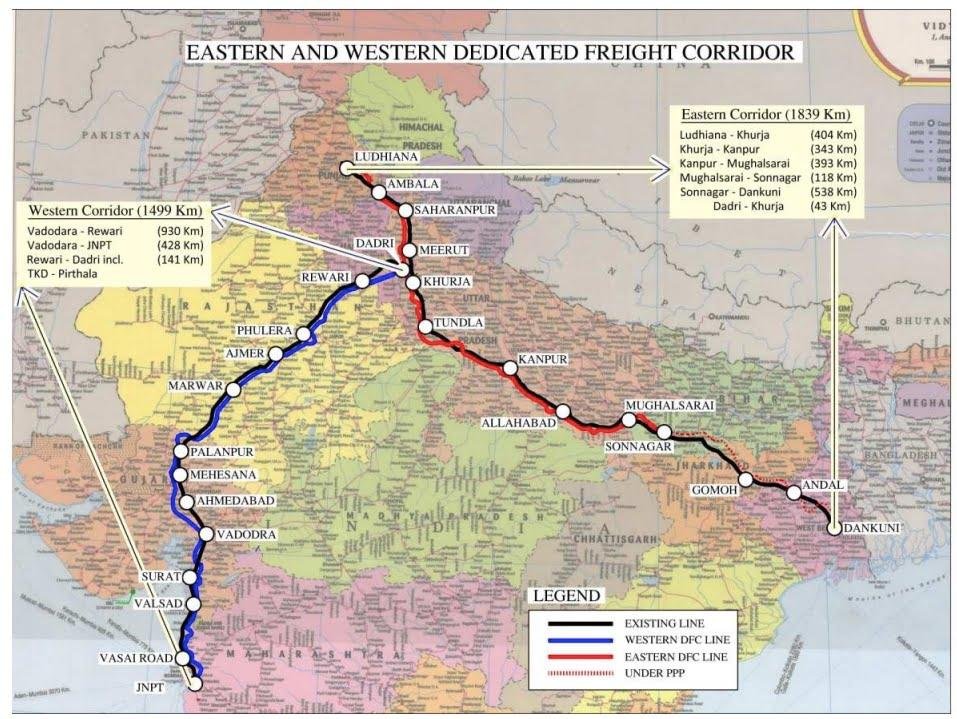
India is building one of the world’s most ambitious logistics infrastructure networks — the PM Gati Shakti National Master Plan — worth USD 1.3 trillion in planned spending. This is creating enormous opportunities in warehousing, last-mile delivery, cold chain, and port logistics.
Key Opportunities
- Investment in modern warehousing and fulfilment centers
- Port and inland container depot (ICD) development
- Partnership with Indian logistics companies for Gulf-India trade corridor services
- Cold chain infrastructure for food, pharmaceutical, and e-commerce logistics
Why This Matters for Arab Investors
For Gulf investors, the question is no longer whether to look at India — it is how to engage strategically. Here is why India stands out specifically for Arab audiences:
- Portfolio Diversification: With Gulf economies still navigating energy transition, India offers exposure to a large, diversified economy with low correlation to oil prices.
- Cultural Compatibility: India’s large Muslim population (200+ million), widespread halal services, mosques in every city, and Urdu/Hindi familiarity make cultural adaptation far smoother for Arab investors than in Western markets.
- High Growth Returns: India’s GDP growth rate of approximately 7% per year means that well-positioned investments benefit from both business growth and currency appreciation over time.
- Trade Corridor Advantage: The India-Middle East-Europe Economic Corridor (IMEC), announced in 2023, is set to make India a central node in global trade routes — significantly benefiting investors in logistics, ports, and manufacturing.
- Diaspora Networks: The 3.5 million Indian professionals living in the UAE alone — many of them entrepreneurs and executives — serve as ready business partners, local advisors, and market connectors for Gulf investors entering India.
How India’s FDI Framework Works
Understanding India’s investment regulations is essential before committing capital. The system is well-structured and largely transparent.
Key Regulatory Bodies
- DPIIT (Department for Promotion of Industry and Internal Trade): Issues FDI approvals under the Government Route
- Reserve Bank of India (RBI): Regulates foreign exchange flows through the Foreign Exchange Management Act (FEMA)
- Registrar of Companies (ROC): Handles company registration and filings
- SEBI: Governs investment in listed securities
Common Business Structures for Foreign Investors
| Structure | Best For | FDI Allowed? | Key Feature |
| Private Limited Company | Most investors and joint ventures | Yes — most sectors | Most flexible; protects personal liability |
| Limited Liability Partnership (LLP) | Professional services firms | Yes — restricted sectors | Simpler compliance than Pvt Ltd |
| Branch Office | Companies testing the market | RBI approval needed | Not a separate legal entity |
| Liaison Office | Market research only | No commercial activity | Cannot earn income in India |
| Wholly Owned Subsidiary | Full control over operations | Yes — automatic route sectors | Gulf investor owns 100% |
Step-by-Step: How to Set Up a Business Investment in India
Phase 1: Research and Planning
- Identify your target sector and confirm FDI eligibility on the DPIIT website or Invest India portal.
- Engage a registered Indian legal advisor or chartered accountant (CA) to advise on structure, tax, and compliance.
- Conduct market research — consider hiring an Indian market research firm or using the Invest India facilitation service (free for serious investors).
Phase 2: Business Registration
- Choose your business structure (typically a Private Limited Company for Gulf investors).
- Register your company with the Ministry of Corporate Affairs (MCA) through the MCA21 portal (mcaportal.gov.in).
- Obtain a Director Identification Number (DIN) and Digital Signature Certificate (DSC) for all directors.
- Apply for Permanent Account Number (PAN) — India’s tax identification number.
- Open a corporate bank account with an Indian bank (HDFC, ICICI, SBI, or an international bank with Indian operations such as HSBC or Standard Chartered).
Phase 3: Regulatory Approvals
- File required notifications with the Reserve Bank of India under FEMA for incoming foreign investment.
- Obtain sector-specific licenses if applicable (e.g., FSSAI license for food businesses, clinical establishment license for healthcare).
- Register for Goods and Services Tax (GST) if your business will have taxable turnover.
Phase 4: Operations Setup
- Identify and lease commercial premises or industrial land (state investment promotion agencies can assist).
- Hire local staff — India has no restrictions on hiring local employees and has a deep, skilled talent pool.
- Set up accounting, payroll, and compliance systems — many Indian CA firms offer comprehensive outsourced compliance packages.
💡 Tip: Many GCC-based businesses establish their India entity while still in their home country using online registration tools. A registered Indian CA can handle the entire process remotely. The typical timeline from decision to registration is 4-8 weeks.
Internal Link Idea: Yallahind — India Business Visa Guide for Gulf Nationals (Business category)
Cultural Comfort: Doing Business in India as an Arab Professional

India is home to over 200 million Muslims, making it one of the largest Muslim-majority population countries in the world. Halal food is widely available in virtually every city, from street stalls to five-star hotels. Mosques are present in every major Indian city. Cities like Hyderabad, Lucknow, Kolkata, Mumbai, and Kerala are particularly well-equipped with halal restaurants, Arabic-language services, and Muslim-friendly infrastructure.
Language and Communication
English is the primary language of Indian business. Almost all formal business communication — contracts, regulatory filings, corporate documents — is conducted in English. Many Gulf investors find that their Arabic-language business instincts (relationship-building, hospitality, patience in negotiations) translate very well into Indian business culture, which similarly values personal relationships and trust before formal deal-making.
Business Etiquette Tips
- Relationship-building matters: Invest time in meeting Indian partners in person before finalizing agreements.
- Negotiations take time: Indian business culture is deliberate. Do not expect quick commitments in first meetings.
- Festivals and working calendars: India has a large number of public holidays. Plan business meetings accordingly.
- Vegetarian considerations: Many Indian business partners are vegetarian or Jain. When hosting dinners, ensure vegetarian options are prominent, not just halal meat.
- Business cards: Exchanging business cards is a common practice and is done with respect — offer and receive with both hands.
⚠️ Warning: Financial agreements must always be formalized in writing under Indian contract law. Verbal agreements, while culturally common in relationship-based contexts, are not legally enforceable in Indian courts.
Common Mistakes and Misunderstandings to Avoid
Mistake 1: Choosing the Wrong Business Structure
Many Gulf investors register a Liaison Office (which cannot conduct commercial activity) when they actually need a Private Limited Company. Clarify your intended activities before registering.
Mistake 2: Underestimating Compliance Requirements
India has a complex tax and regulatory compliance ecosystem. Failing to file GST returns, corporate tax filings, or annual ROC reports on time results in penalties. Budget for professional compliance support from day one.
Mistake 3: Not Conducting Proper Due Diligence on Partners
India’s business environment is vibrant but also requires careful vetting of local partners. Always verify credentials, check financial histories, and seek references before entering joint ventures.
Mistake 4: Assuming a Pan-India Market
India is not one market — it is 28 states with different regulations, languages, consumer behaviors, and business cultures. A strategy that works in Mumbai may not work in Chennai or Kolkata. Market-entry planning should be state-specific.
Mistake 5: Ignoring Repatriation Rules
While India allows repatriation of profits and capital in most sectors, specific conditions apply under FEMA and RBI regulations. Understand dividend repatriation rules before investing, particularly for real estate and financial services.
Mistake 6: Neglecting Local Legal Advice
Some Gulf investors rely on advisors based in their home country who lack current knowledge of Indian law. Always engage a registered Indian lawyer and CA for any significant investment decision.
Frequently Asked Questions (FAQ)
Q1: Can Gulf nationals own 100% of a business in India?
Yes, in most sectors, Gulf nationals can own 100% of an Indian company through the Automatic FDI Route. Sectors such as technology, manufacturing, education, and healthcare generally allow 100% foreign ownership. Some sectors like defense, broadcasting, and multi-brand retail have ownership caps and require government approval.
Q2: How much capital is required to start a business in India?
India has no minimum paid-up capital requirement for Private Limited Companies since the Companies Amendment Act 2015. You can technically incorporate with a nominal amount. However, realistic startup capital depends entirely on your sector and scale. For a small technology or consulting company, USD 10,000-50,000 may suffice. For manufacturing or real estate, capital requirements are significantly higher.
Q3: What visa do Gulf nationals need to do business in India?
Gulf nationals visiting India for business meetings and exploration can use a Business Visa (B Visa), which is available as an e-Visa for GCC nationals and allows stays of up to 180 days per visit. For those establishing long-term operations, an Employment Visa for key personnel and an OCI (Overseas Citizen of India) card for eligible NRI founders may also be relevant.
Q4: How does taxation work for Gulf investors in India?
India has Double Taxation Avoidance Agreements (DTAAs) with all GCC countries, meaning income earned in India is generally not taxed twice. India’s corporate tax rate for domestic companies is 22% (plus surcharges); for new manufacturing companies it is 15%. Capital gains tax applies on sale of assets and shares. Dividends are taxable in the hands of shareholders at applicable rates. A qualified Indian CA should structure your investment to optimize tax efficiency.
Q5: Is it safe to invest in India? What protections exist for foreign investors?
India is a rule-of-law democracy with an independent judiciary, a well-established corporate legal framework, and international arbitration provisions for disputes. The Bilateral Investment Treaty (BIT) framework between India and GCC states provides formal protections. India’s Insolvency and Bankruptcy Code (IBC), introduced in 2016, has significantly strengthened creditor protection. While disputes do arise in any market, the legal system provides enforceable remedies.
Q6: Are there specific incentives for GCC investors in India?
Yes. India offers Production-Linked Incentive (PLI) schemes across 14 sectors — including electronics, pharmaceuticals, food processing, and textiles — providing cash incentives of 4-20% of incremental sales to eligible manufacturers. State governments additionally offer land subsidies, power tariff concessions, and tax holidays. GCC investors targeting energy and infrastructure may also access dedicated bilateral project agreements facilitated by the India-UAE and India-Saudi bilateral investment frameworks.
Q7: What is the India-Middle East-Europe Economic Corridor (IMEC) and how does it affect investment?
IMEC is a planned infrastructure and trade corridor announced at the G20 Summit in India (2023), connecting India with the Gulf (UAE, Saudi Arabia) and onward to Europe via rail, shipping, and data cables. If fully implemented, IMEC would make India a central hub in global supply chains, creating major opportunities for investment in ports, logistics, warehousing, energy, and digital infrastructure along the corridor.
Impact on Society and the Region
Gulf investment in India creates a positive cycle of economic benefits for both regions. For India, FDI from the Gulf brings capital, technology transfer, and strengthened trade ties. For Gulf countries, India investments offer economic diversification — a national priority for countries pursuing Vision 2030 (Saudi Arabia), UAE Vision 2031, and Qatar National Vision 2030 goals.
At the community level, Arab investment in India’s healthcare, education, and food sectors can directly improve access to quality services for India’s large population. Conversely, India’s economic relationship with the Gulf has historically supported the employment and livelihoods of millions of Indian workers across GCC countries — a relationship that benefits both economies.
Conclusion: A Generational Opportunity
India’s emergence as a global economic power is one of the defining stories of the 21st century. For Gulf investors, the window for first-mover advantage in sectors like renewable energy, digital technology, healthcare, and logistics is open — but it will not remain open indefinitely as competition for Indian assets and partnerships intensifies globally.
The combination of India’s scale, growth velocity, cultural familiarity, and deep India-Gulf bilateral ties makes this an investment relationship that makes sense not only financially but strategically. Whether you are a sovereign wealth fund, a family office, or an individual entrepreneur, India offers entry points appropriate to your scale and goals.
The key to success is preparation: understand the regulatory environment, engage qualified local advisors, build genuine partnerships, and take a medium-to-long-term view. India rewards patient, informed investors who approach the market with respect and seriousness.
Yallahind is committed to providing Arab audiences with the knowledge, connections, and practical guidance they need to navigate India with confidence — in business, education, healthcare, and travel. Explore our full range of sector guides, expert interviews, and practical tools to make your India journey informed and successful.
Explore More India Guides on Yallahind
Business | Education | Healthcare | Tourism | Culture
Disclaimer
This article is for informational purposes only and does not constitute financial, legal, or investment advice. All data cited reflects the best available information as of April 2026. Investment regulations, tax laws, and economic conditions change. Always consult qualified legal, financial, and regulatory professionals before making investment decisions in India or any other jurisdiction.
© 2026 Yallahind. All Rights Reserved.